
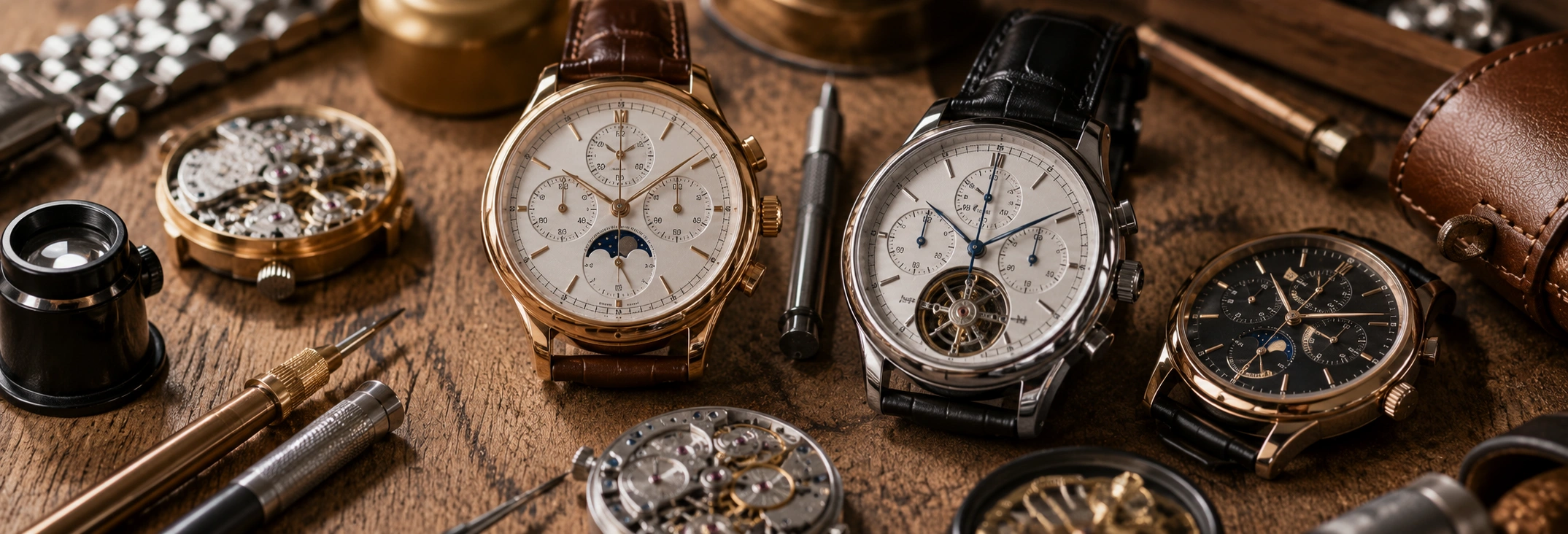
Luxury watches are admired for their craftsmanship, heritage, and exclusivity. Yet what truly sets many premium timepieces apart is what's happening beneath the dial. Watch complications, functions that go beyond basic timekeeping, represent the artistry and engineering that define fine horology.
As luxury consumers become more informed, interest in mechanical watches and advanced watch movements continues to grow. Buyers are no longer focused solely on brand names; they want to understand the features, craftsmanship, and stories behind the watches they purchase.
Whether you're a collector, luxury gift buyer, or first-time enthusiast, understanding watch complications can help you appreciate what makes a timepiece truly exceptional.
What Are Watch Complications?
In watchmaking, a complication is any function beyond displaying hours, minutes, and seconds. These additional features require extra components within the movement, increasing both complexity and craftsmanship.
Common watch complications include:
Chronographs (stopwatch functions)
Moonphase displays
GMT or dual-time zones
Perpetual calendars
Power reserve indicators
Tourbillons
Complications are highly valued because they showcase technical expertise and mechanical innovation. In luxury watches, they often serve as indicators of quality, exclusivity, and horological achievement.
The more sophisticated the complication, the greater the skill required to design, manufacture, and assemble the movement.
The Most Popular Watch Complications Explained
Tourbillon Watch
A tourbillon watch is one of the most prestigious complications in luxury watchmaking. Invented in 1801 by Abraham-Louis Breguet, the tourbillon was designed to improve accuracy by counteracting the effects of gravity on a watch's movement.
Today, modern manufacturing has reduced the practical necessity of the tourbillon, but it remains a symbol of exceptional craftsmanship. Its rotating mechanism is visually captivating and extremely difficult to produce, making tourbillon watches highly desirable among collectors.
Because of their complexity and limited production, tourbillon watches are often found in the highest tiers of luxury watchmaking.
Chronograph Watch
A chronograph watch combines traditional timekeeping with a stopwatch function. Operated through additional pushers on the case, the wearer can start, stop, and reset an independent timing mechanism.
Chronographs became popular in aviation, motorsports, and sports timing, where precise measurement was essential. Today, they remain among the most sought-after complications because they offer both functionality and visual appeal.
For many buyers, a chronograph provides the perfect balance between practicality and mechanical sophistication.
Moonphase Watch
A moonphase watch displays the current phase of the moon through a dedicated aperture on the dial. Using a rotating disc, the complication tracks the lunar cycle with remarkable precision.
Although largely decorative today, moonphase displays are prized for their beauty and connection to traditional watchmaking. They add elegance, depth, and storytelling to a watch design.
Moonphase watches are especially popular among collectors and luxury gift buyers who appreciate the blend of art and engineering.
Other Popular Complications
Several other complications continue to play an important role in luxury watches:
GMT/Dual Time: Displays multiple time zones, making it ideal for frequent travelers.
Perpetual Calendar: Automatically adjusts for varying month lengths and leap years.
Power Reserve Indicator: Shows how much energy remains in the watch's mainspring.
These complications enhance both functionality and collector appeal, offering practical benefits alongside mechanical complexity.
Why Luxury Buyers Care About Watch Complications
Luxury consumers today are more educated and research-driven than ever before. Rather than purchasing solely for status, many buyers want to understand what makes a watch special.
Complications add value by demonstrating craftsmanship, innovation, and heritage. They also create emotional connections. A moonphase watch may appeal to someone who loves astronomy, while a chronograph may resonate with a motorsport enthusiast.
Collector communities and online watch education have further increased interest in complications. Buyers now recognize that advanced watch movements often represent years of engineering expertise and centuries of horological tradition.
As a result, complications have become an important factor in purchasing decisions across the luxury watch market.
How Complications Affect Value and Collectability
Complications often contribute to a watch's exclusivity and long-term desirability. Many advanced movements require extensive hand assembly, specialized expertise, and limited production runs.
Collectors frequently seek watches with complications because they showcase a higher level of craftsmanship. Tourbillons, perpetual calendars, and rare chronographs are particularly respected within enthusiast communities.
Complications can also strengthen a brand's reputation. Manufacturers capable of producing sophisticated mechanical movements are often viewed as leaders in horology.
While no watch guarantees investment returns, complicated timepieces often maintain stronger collector interest due to their rarity, technical achievement, and historical significance.
Choosing the Right Watch Complication
The best complication depends on your lifestyle and preferences.
For collectors: Tourbillons and perpetual calendars offer exclusivity and technical prestige.
For travelers: GMT and dual-time complications provide practical convenience.
For everyday wear: Chronographs deliver functionality and versatile styling.
For luxury gifting: Moonphase watches combine elegance, symbolism, and timeless appeal.
The ideal choice aligns with both personal taste and intended use. Understanding the purpose behind each complication can make the buying experience more meaningful and rewarding.
The Future of Watch Complications
Despite the rise of smart technology, demand for mechanical watches continues to grow. Consumers increasingly value craftsmanship, authenticity, and products with lasting significance.
Younger luxury buyers are also entering the market with a strong interest in watch education and transparency. They want to know how a watch works and why it deserves its premium positioning.
As this trend continues, complications will remain central to luxury watchmaking, serving as enduring symbols of innovation, artistry, and heritage.
Conclusion
Watch complications are far more than technical features. They represent the craftsmanship, creativity, and engineering excellence that make luxury watches so fascinating.
From the precision of a tourbillon watch to the functionality of a chronograph watch and the elegance of a moonphase watch, complications influence how collectors and enthusiasts evaluate premium watches.
By understanding these features, buyers can make more informed decisions and gain a deeper appreciation for the remarkable world of fine watchmaking.