
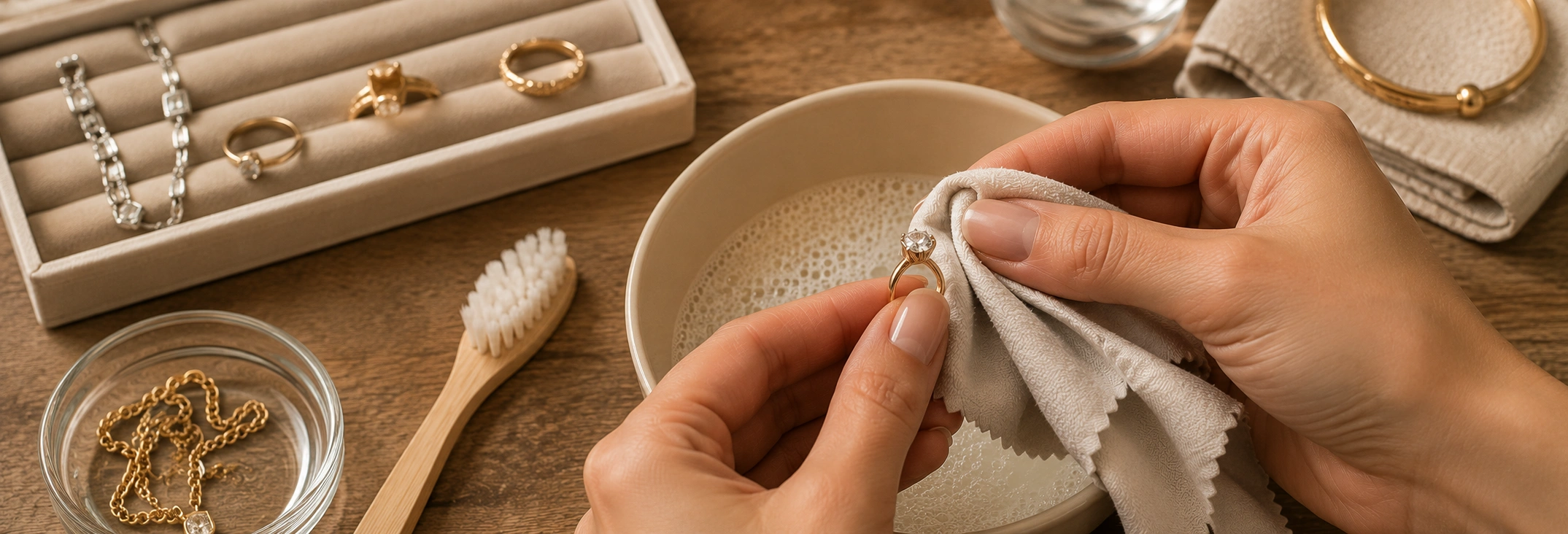
Your jewelry is more than an accessory; it often represents memories, milestones, and personal style. However, even the finest pieces lose their brilliance over time due to everyday exposure to dust, body oils, cosmetics, and moisture. Knowing how to clean jewelry properly can help preserve its beauty and extend its lifespan.
Whether you own gold, silver, diamonds, or gemstone jewelry, following the right cleaning and storage techniques prevents damage while maintaining its original shine. This jewelry cleaning guide covers safe cleaning methods, storage practices, and maintenance tips to keep your collection looking its best.
Why Regular Jewelry Care Matters
Regular cleaning isn't just about appearance; it protects your investment.
Daily exposure to lotions, perfumes, sweat, and environmental pollutants creates a thin layer of residue that reduces sparkle. Without proper jewelry maintenance, dirt can also wear down settings and increase the risk of loose stones.
Benefits of regular jewelry care include:
Maintains brilliance and shine
Prevents tarnishing
Protects delicate gemstones
Extends the life of fine jewelry
Reduces costly repairs
Learning how to clean jewelry regularly helps your favorite pieces stay beautiful for years.
How to Clean Jewelry at Home Safely
Many types of jewelry can be cleaned at home using simple materials.
Clean Gold Jewelry
Gold jewelry responds well to gentle cleaning.
Steps:
Mix warm water with a few drops of mild dish soap.
Soak the jewelry for 15–20 minutes.
Use a soft toothbrush to remove dirt.
Rinse with clean water.
Dry using a lint-free microfiber cloth.
This is the best way to clean gold jewelry without damaging its finish.
Clean Silver Jewelry
Silver naturally tarnishes when exposed to air.
To clean silver jewelry:
Use a silver polishing cloth.
Wash gently with mild soap and warm water.
Dry immediately to prevent water spots.
Avoid abrasive cleaners or toothpaste, which may scratch sterling silver.
Clean Diamond Jewelry
Diamonds attract oils quickly, reducing their sparkle.
To clean diamond jewelry:
Soak it in warm, soapy water.
Gently brush around the setting.
Rinse thoroughly.
Dry with a soft cloth.
This method is one of the safest ways to clean jewelry at home.
Continue Building Your Jewelry Knowledge
Keeping your jewelry clean is only part of proper ownership. If you're planning to expand your collection, our guide to building a Luxury Jewelry Collection offers practical advice on choosing timeless pieces that retain both beauty and value over time.
Jewelry Cleaning Methods by Material
Jewelry Type | Best Cleaning Method | Avoid |
Gold | Mild soap & warm water | Chlorine and bleach |
Silver | Silver polishing cloth | Toothpaste and harsh cleaners |
Diamond | Soft brush & dish soap | Strong chemicals |
Pearls | Damp microfiber cloth | Soaking in water |
Opals | Soft damp cloth | Steam or ultrasonic cleaners |
Following this jewelry care guide helps preserve each material's unique characteristics.
How to Store Jewelry Properly
Cleaning is only half the equation. Knowing how to store jewelry correctly prevents scratches, tarnish, and unnecessary wear.
Follow these storage tips:
Store each piece separately.
Use soft-lined jewelry boxes.
Keep silver jewelry in anti-tarnish pouches.
Fasten necklaces before storing to prevent tangling.
Store jewelry in a cool, dry location.
Keep pieces away from direct sunlight and humidity.
Proper storage significantly reduces future cleaning needs.
Common Jewelry Care Mistakes
Even high-quality jewelry can become damaged through poor care habits.
Avoid these mistakes:
Wearing jewelry while swimming
Cleaning with bleach or ammonia
Tossing multiple pieces into one box
Sleeping while wearing delicate jewelry
Ignoring loose prongs or worn clasps
These small habits make a significant difference in long-term fine jewelry care.
When Professional Cleaning Is Worth It
Although how to clean jewelry at home is useful for routine maintenance, professional cleaning remains important.
Consider professional servicing if:
Stones appear loose.
Jewelry contains pearls or opals.
Antique pieces require restoration.
Intricate settings collect stubborn dirt.
Your jewelry hasn't been inspected for over a year.
Professional jewelers can safely clean areas that are difficult to reach while checking for hidden damage.
Caring for Your Jewelry Collection
Luxury jewelry deserves consistent care throughout the year.
Simple maintenance habits include:
Clean frequently worn jewelry every few weeks.
Remove jewelry before exercising or swimming.
Apply perfumes before wearing jewelry.
Schedule annual inspections.
Store every piece separately.
Buying from trusted sellers who offer authentic, well-crafted jewelry also contributes to long-term durability and peace of mind.
Conclusion
Understanding how to clean jewelry is one of the easiest ways to protect your investment and preserve its beauty. Regular cleaning, proper storage, and routine inspections help gold, silver, diamonds, and gemstones maintain their brilliance for years.
Whether you're caring for a cherished heirloom or building a modern collection, consistent maintenance ensures every piece remains as beautiful as the day you received it.