
You find something you love online. The photos look perfect. The price feels right. The seller seems legitimate. You buy it, and then it arrives. Something is off. The leather feels thin. The stitching is wrong. The serial number does not match anything on the brand's website.
That moment of doubt is something millions of shoppers experience every year, and it is getting more common, not less.
Shopping online offers more choice than ever, but it also raises an important question: how can you be sure a product is authentic? From jewelry and watches to handbags and footwear, imitation products have become increasingly sophisticated. For many shoppers, confirming authenticity is now just as important as comparing price, style, or features before making a purchase.
Blockchain product authentication technology is changing that. It is one of the most practical tools available to modern shoppers, and once you understand how it works, you will never want to buy a premium product without it.
What Is Blockchain Product Authentication Technology
Most people hear "blockchain" and think of cryptocurrency. That is understandable, but blockchain is simply a type of record-keeping system. Think of it like a permanent notebook that cannot be erased, edited, or faked.
How It Works for a Physical Product
When a product is made, the brand creates a unique digital record for it, like a digital birth certificate. That record gets stored on the blockchain and contains details like where the product was made, what materials were used, who owns it, and when it changed hands.
That record cannot be altered without leaving a visible trace. It lives permanently on the blockchain, accessible to anyone who knows where to look.
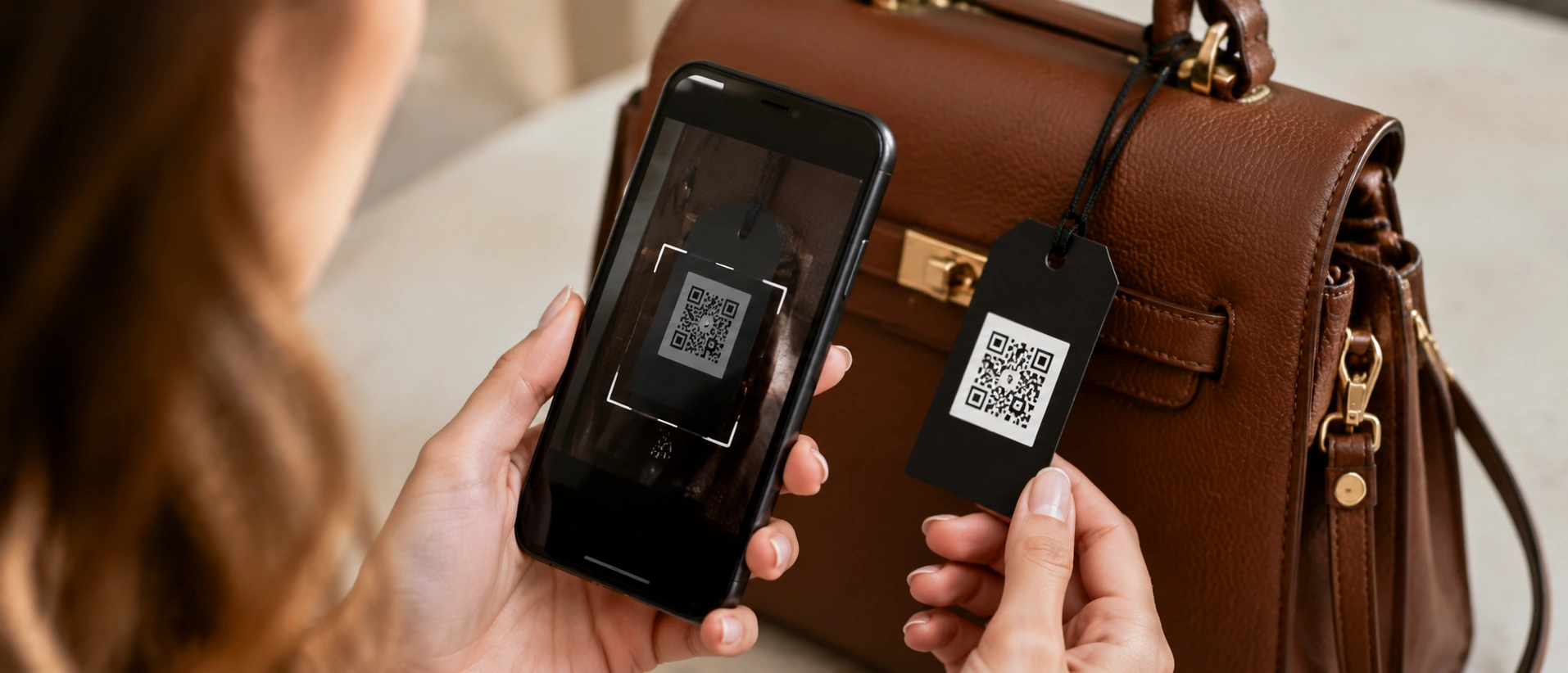
When you buy a product that uses blockchain product authentication technology, you receive a way to verify that record yourself. Usually, it is as simple as scanning a QR code on the product or packaging. Within seconds, you can check whether the item you are holding matches the original record the brand created.
No guesswork. No trusting a seller's word. Just transparent, verifiable product authenticity you can check yourself.
Why This Matters More Than a Paper Certificate
For years, luxury brands used certificates of authenticity to prove their products were genuine. A card in the box. A hologram sticker. A numbered tag.
The Problem With Traditional Authentication Methods
The issue is that certificates can be copied. Holograms can be replicated. Serial numbers can be faked. Traditional product authentication methods were always one step behind the counterfeiters, because anything a brand could print or stamp, a counterfeiter could eventually reproduce.
Blockchain verification removes that vulnerability entirely. Since blockchain records are immutable, they cannot be altered or forged, which means a verified blockchain record attached to a product is the only form of authentication that a counterfeiter genuinely cannot replicate.
People who know a lot about this stuff are saying that blockchain and digital tagging are really important for solving problems.
This is a meaningful shift for anyone buying authentic products in premium categories. A paper certificate tells you what a seller claims. A blockchain record tells you what actually happened, from the moment the product was made.
Blockchain Authentication Methods: How Verification Actually Happens
Blockchain product authentication isn't a single tool, it's a category of technology with a few common verification methods, each suited to different products:
QR code tagging: A printed code on packaging or the product itself, linked to the blockchain record. Fast to scan, low cost, ideal for footwear and accessories.
NFC chip embedding: A tiny chip embedded directly into the product (common in watches and jewelry), verified with a phone tap rather than a camera scan. Harder to remove or transfer to a fake.
RFID tagging: Used more often in supply chain and warehouse tracking, confirming a product's journey before it reaches the shopper.
Smart tag / NFC hybrid tags: Increasingly used in luxury goods, combining tamper-evidence (the tag breaks if removed) with a blockchain-linked digital record.
Each method solves the same core problem, proving a product's origin is genuine and unaltered, but the physical implementation differs based on the product category. This is also why blockchain product authentication technology is often described as a system, not a single feature: the blockchain record is the foundation, and QR, NFC, or RFID are simply how shoppers access it.
What Blockchain Authentication Tells You as a Shopper
When you verify a product using blockchain authenticity verification, the record you access can tell you several things that a product description or seller profile simply cannot.
What a Verified Record Shows You
Where the product was made: the country, region, and in some cases, the specific atelier or tannery the materials came from
What materials were used: particularly relevant for leather goods, fine jewelry, and luxury watches, where material quality directly affects value
Whether the product is genuine: a direct match between the item in your hands and the original record the brand registered at the time of manufacture
Who has owned it before: for resale purchases, the ownership history confirms that the product is what the seller claims it to be
This level of verified product authenticity transforms online shopping from a leap of faith into an informed decision, which is exactly what shoppers investing in premium products deserve.
How Evoke Marketplace Builds Blockchain Authentication Into Every Purchase
Most marketplaces leave trust in ecommerce to chance. Evoke Marketplace takes a different approach by making blockchain product authentication a standard part of every purchase, not an optional extra.
Every product available through Evoke carries blockchain-backed product authentication, a verified digital record attached to the item that confirms its materials, origin, and artisan provenance. When you buy a handcrafted jewelry piece from KICH, a luxury watch from CS Beverly Hills, or premium footwear from A Veer through Evoke, you receive transparent access to that record as part of the purchase.
This is what transparent shopping looks like in practice. You do not have to trust that a product is genuine. You can verify it.
The Evoke Gratitude Token (EGT) reward system adds a further layer of value, meaning every blockchain verification-backed purchase you make on the platform also earns tokens toward exclusive products and experiences.
For buyers who care about blockchain technology in retail done properly, not as a marketing claim but as a genuine commitment to counterfeit product prevention, Evoke is the platform built around that standard.
Conclusion
Blockchain product authentication technology is not complicated. At its core, it is simply a way to know, with certainty, that what you are buying is exactly what it claims to be. A permanent, tamper-proof digital record travels with the product from the moment it is made and stays with it for the life of ownership.
In a retail environment where counterfeit goods are sophisticated and common, that certainty is not a luxury feature. It is the baseline that premium shopping should always have offered.