
Counterfeiting costs the global luxury industry an estimated $450 billion annually. Paper certificates are lost, forged, or separated from the products they are meant to protect. Provenance disputes erode resale value. And the buyer who paid a premium precisely because they expected authenticity is left with uncertainty.
NFT ownership certificates are the most credible solution the industry has produced. Not a speculative technology trend, but a practical, blockchain-backed answer to one of luxury commerce's oldest and most expensive problems.
Here is what every modern luxury buyer needs to understand.
What Is an NFT Ownership Certificate?
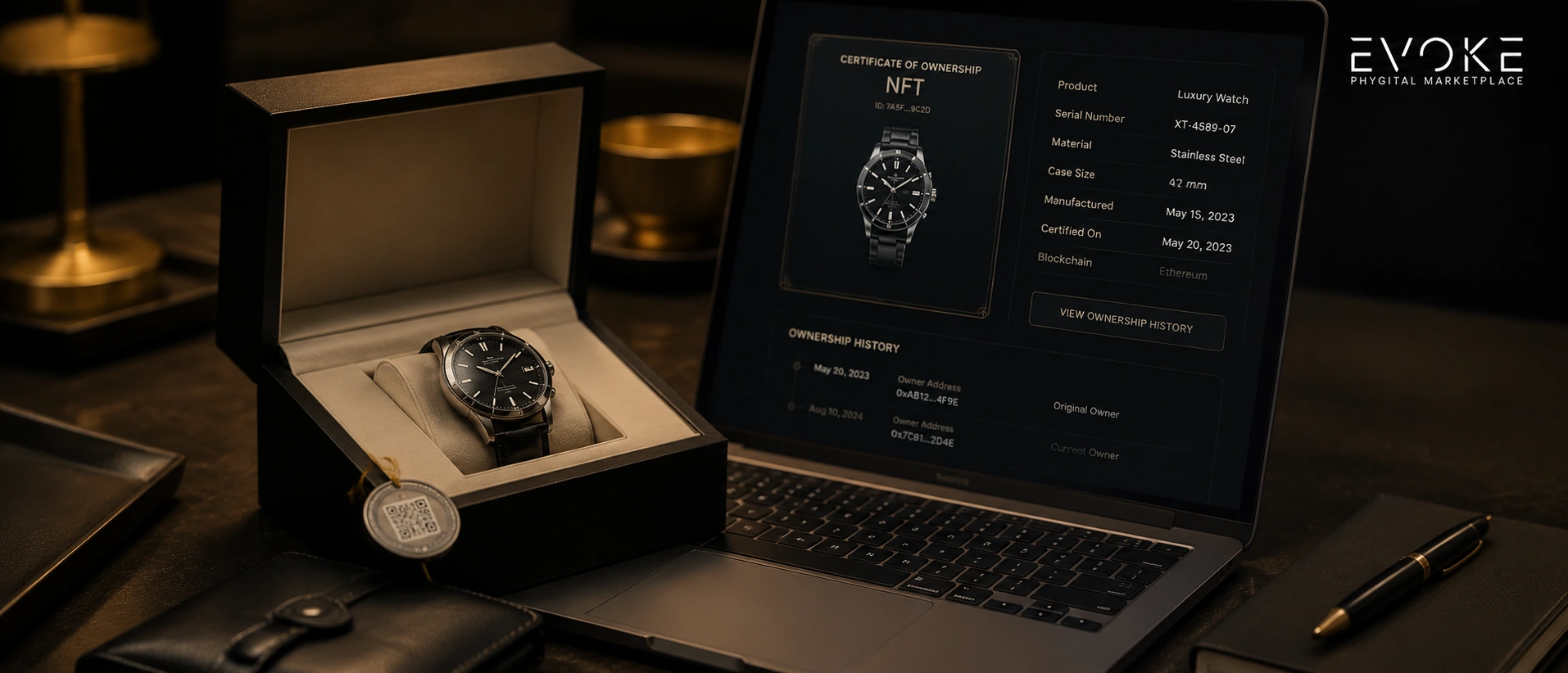
An NFT ownership certificate is a unique digital token recorded on a blockchain that represents authenticated ownership of a specific physical product. It is permanently tied to that object and only that object through physical-digital binding technologies such as NFC chips, embedded RFID tags, or scannable QR codes.
Unlike a paper certificate, it cannot be forged, duplicated, or lost. Unlike a hologram, it cannot be replicated. The blockchain record is immutable, meaning once it is written, it cannot be altered without detection.
When a product is certified, the token captures its origin, manufacturing details, material provenance, and ownership history. Every subsequent transfer of ownership is recorded automatically. The result is a permanent, verifiable chain of custody that follows the product for its entire life.
Why This Matters for Luxury Buyers
Authenticity You Can Verify Independently
Traditional authentication has always required trusting an intermediary a brand, a dealer, an auction house. Blockchain verification changes this. The record is publicly accessible and independently verifiable by anyone, at any time, without needing to contact the issuing brand.
For luxury buyers, this is a fundamental shift in the quality of assurance available at the point of purchase and resale.
Provenance That Adds Value
In watches, jewelry, handbags, and fine art, provenance history directly affects resale value. A piece with a documented, unbroken ownership chain commands a meaningful premium over an equivalent piece with incomplete records.
NFT certificates create that chain automatically. Every transfer is timestamped and recorded. The gifting implication is equally significant, as a blockchain-verified ownership transfer adds a layer of documentation and permanence to a luxury gift that no paper receipt can replicate.
For a deeper technical understanding of how this works across product categories, the guide to Blockchain Product Authentication is the authoritative reference.
NFT Ownership vs Traditional Certificates
Feature | Traditional Certificate | NFT Ownership Certificate |
|---|---|---|
Authenticity Verification | Physical document, easy to forge | Blockchain-verified and tamper-proof |
Ownership Tracking | Limited or manual | Transparent and real-time |
Resale Validation | Difficult | Easy and traceable |
Digital Integration | None | Fully digital and transferable |
Security Level | Moderate | Very high |
NFT systems clearly offer stronger long-term reliability in verifying product identity.
NFT Certificates and the Phygital Luxury Experience
NFT ownership certificates are a core component of the phygital retail model, the convergence of physical product quality with digital intelligence and permanence. Owning an NFT-certified product means owning more than the object itself. It means owning a verified identity for that object: its history, its authenticity, and its place in a transparent ownership record.
Beyond authentication, leading brands are using NFT certificates to unlock exclusive buyer benefits, warranty activation, access to limited product drops, brand community membership, and personalised after-sales service, all tied to verified ownership.
For buyers who want to understand how the physical and digital retail experience is converging more broadly, How Phygital Retail Works provides the essential context.
What Buyers Should Know Before Purchasing
Not all NFT certificates are equal. Before accepting a blockchain certificate as proof of authenticity, these are the questions worth asking:
Which blockchain is the certificate issued on, and does it have a verifiable public record?
How is the physical product bound to its digital certificate, and can that binding be verified?
Is the issuing platform part of an established consortium or a proprietary system with a documented track record?
What happens to the certificate if the issuing platform closes?
Is the smart contract publicly audited and verifiable?
Genuine transparency looks like documented, on-chain records from established platforms. Vague references to "blockchain technology" without verifiable detail are a red flag, not a credential.
The Future of NFT Ownership Certificates
The trajectory is clear. EU digital product passport legislation, coming into force progressively from 2026, will require verifiable product provenance records across luxury and fashion categories. Blockchain-based certificates are the most credible mechanism for compliance.
AI and blockchain integration is accelerating, enabling automated authentication at the point of sale, real-time provenance verification, and smart contract royalties that ensure brands receive a percentage of every authenticated secondary sale.
Within five years, a physical luxury purchase without a blockchain ownership certificate will be the exception rather than the rule. Buyers who understand this now are better positioned, whether they are acquiring for personal enjoyment, gifting, collecting, or long-term value retention.
At Evoke Marketplace, blockchain-backed authenticity is part of the platform's commitment to curated luxury commerce that buyers can trust completely.