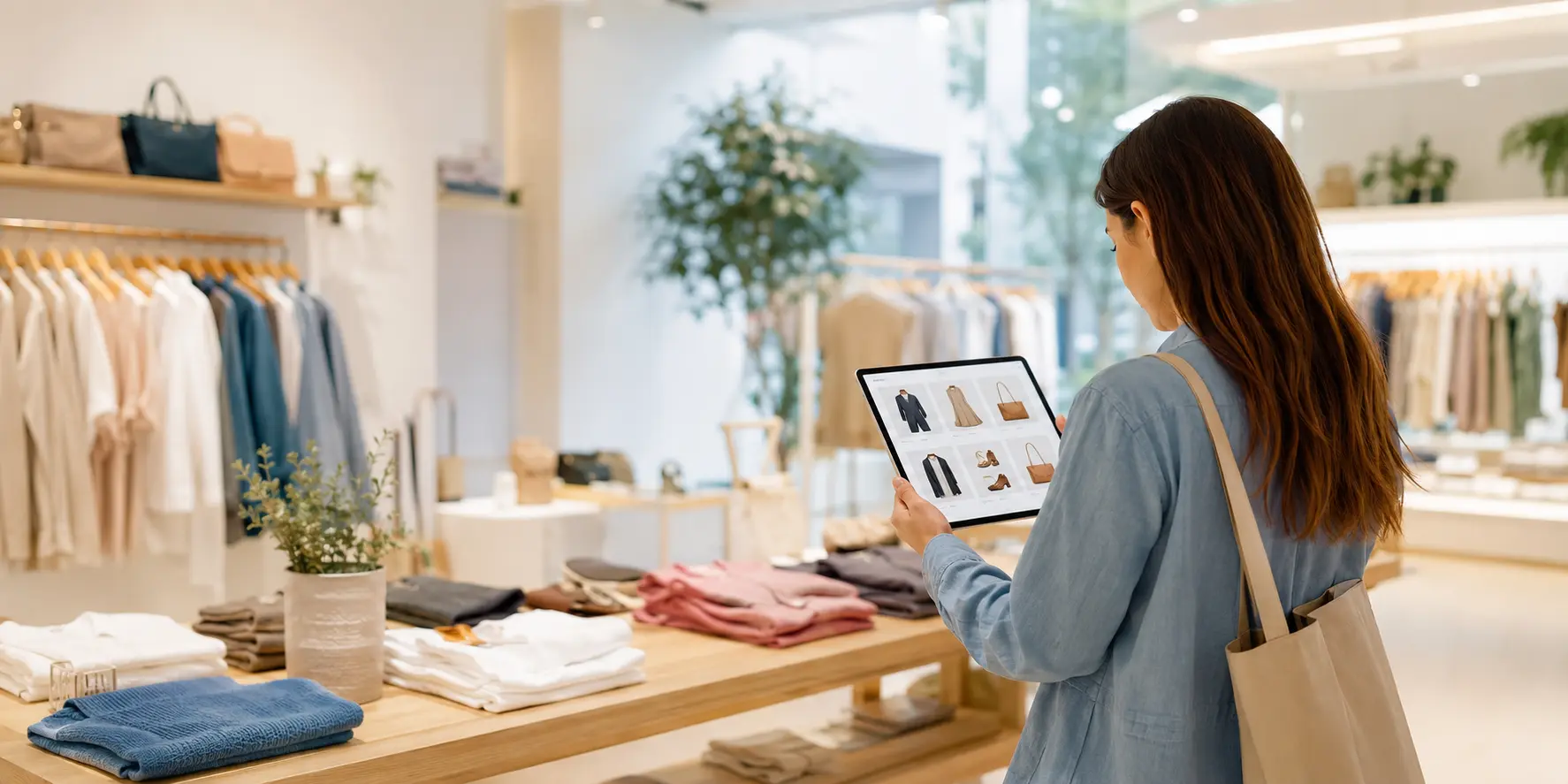


Think about the last time you shopped for something valuable. You probably looked it up online first, read about the brand, maybe watched a review from someone you trusted, and only then made your decision. You did not separate "online shopping" from "real-world shopping." You moved between both without thinking about it.
That natural behavior has a name at this time: the phygital experience.
A phygital experience connects physical and digital shopping into one continuous, seamless journey. It is not a technology gimmick. It is simply what modern customers expect, and the brands that deliver it are the ones building real loyalty right now.
According to UPS's 2026 Consumer Trends Report, phygital shopping is no longer a buzzword; it is a baseline expectation for today's shoppers. Retail has changed. The question for brands is whether they have changed with it.
Why Traditional Online Shopping Leaves Customers Wanting More
Standard ecommerce platforms were built for speed. Find a product, compare the price, check out, done. For buying everyday items, that works fine.
But when someone wants to buy luxury products, designer bracelets, or fashion accessories that carry real personal meaning, speed alone is not enough. They want to feel confident before they commit. They want to understand the brand, the quality, and the story behind what they are buying.
What Shoppers Actually Struggle With on Generic Platforms
No product confidence: images and descriptions alone do not answer the question "will I actually love this?"
No brand transparency: who made it, where it came from, and whether the seller is credible
No personal connection: every customer sees the same generic catalog with no relevance to their life
No meaningful context: the product sits in a list next to ten competitors, competing only on price
Research shows that 97% of consumers have abandoned purchases due to inconvenience, and the biggest source of that inconvenience is not delivery speed but the lack of confidence at the point of decision. That confidence gap is exactly what a phygital experience fills.
What a Phygital Experience Actually Looks Like
A phygital experience is easier to understand through what it feels like rather than how it is defined.
Imagine shopping for a handcrafted designer bracelet from an artisan you discovered through a creator you follow. You watch a short video showing how it is made. You read the brand's values. You check its blockchain-verified certificate of authenticity. You see reviews from real buyers in the community. Then you complete your purchase — fully confident, connected to the brand, and excited about what is arriving.
That is a phygital experience in practice. It combines digital tools, real-world trust, and human connection into one purchase journey.
The Three Pillars of a Strong Phygital Experience
1. Confidence Before Purchase: Customers need more than a product photo. Rich brand storytelling, creator demonstrations, and verified authenticity systems all work together to remove hesitation before checkout.
2. Personal Relevance A phygital experience adapts to the individual. Curated collections, lifestyle-based recommendations, and community-driven discovery all help shoppers find products that actually reflect who they are.
3. Human Connection The most powerful part of physical retail was always the human element: a knowledgeable recommendation, a story from the maker, a community of people who share the same taste. A phygital experience brings that human connection back into digital commerce.
Why Phygital Experience Matters More for Premium and Lifestyle Retail
Not every product requires a phygital experience. But for luxury products, fashion accessories, wellness goods, and artisan craftsmanship, it is not optional.
Stores using phygital strategies report a 20% increase in brand loyalty and a 25% boost in customer engagement, according to Statista. Those numbers are especially pronounced in premium categories where customers invest emotionally as well as financially in what they buy.
When someone buys fashion accessories that reflect their identity, they are not just buying an object. They are buying a story, a value, a connection to something they care about. A phygital experience delivers all of that, and a standard product listing delivers none of it.
Among Fortune 500 retailers, 70% are now actively integrating phygital technologies into their customer experience strategies, because the data consistently shows that experience-driven commerce outperforms transaction-driven commerce in every premium category.
How Evoke Marketplace Delivers a Phygital Experience
Evoke Marketplace is not a standard ecommerce platform. It was built from the ground up around the phygital experience, connecting customers to premium brands, ethical artisans, and purpose-driven products through a commerce model that goes far beyond listings and checkout.
What Makes Evoke's Phygital Experience Different
Blockchain-Verified Product Authenticity: Every product on Evoke carries a blockchain-backed certificate. When you buy luxury jewelry through Evoke, you always know exactly what you are buying, who made it, and where it came from. No guesswork, no uncertainty.
Creator-Led Commerce: Evoke works with creators whose audiences trust them. When a creator presents a product inside the Evoke ecosystem, customers connect with it through a voice they already believe in, not through a sponsored ad they scroll past.
Purpose-Driven Brand Curation: Every brand on Evoke passes a vetting process that checks both product quality and ethical values. Customers do not just shop a catalog. They shop a curated community of brands that stand for something.
Evoke Gratitude Token (EGT) Rewards: Evoke rewards customers for participating in the community, not just spending. Reviews, referrals, and daily engagement all earn EGT tokens that unlock real rewards, from exclusive products to premium lifestyle experiences.
This combination creates a phygital experience that makes shopping feel personal, confident, and genuinely meaningful every single time.
The Direction Modern Retail Is Heading
In this time, omnichannel and phygital models are no longer just a strategy; they are an operational necessity. Leading retailers are heavily investing in seamless journey orchestration that integrates mobile, AR, in-store smart technology, and adaptive digital formats to deliver highly personalised experiences.
The brands winning customer loyalty this year are not the ones with the biggest catalogs or the lowest prices. They are the ones making customers feel seen, confident, and connected throughout the entire buying journey.
A phygital experience is how that happens. And for the customers who have experienced it, going back to a standard ecommerce platform feels like a step backwards.
Conclusion
The rise of the phygital experience reflects how customer expectations are changing across modern retail. Consumers now expect stronger brand interaction, personalized shopping journeys, and connected experiences across both digital and physical environments. Evoke marketplace supports this shift by combining experience-driven commerce, trust-focused interaction, and community engagement into one connected ecosystem. As retail continues evolving, brands that prioritize customer experience and meaningful engagement will define the future of commerce.